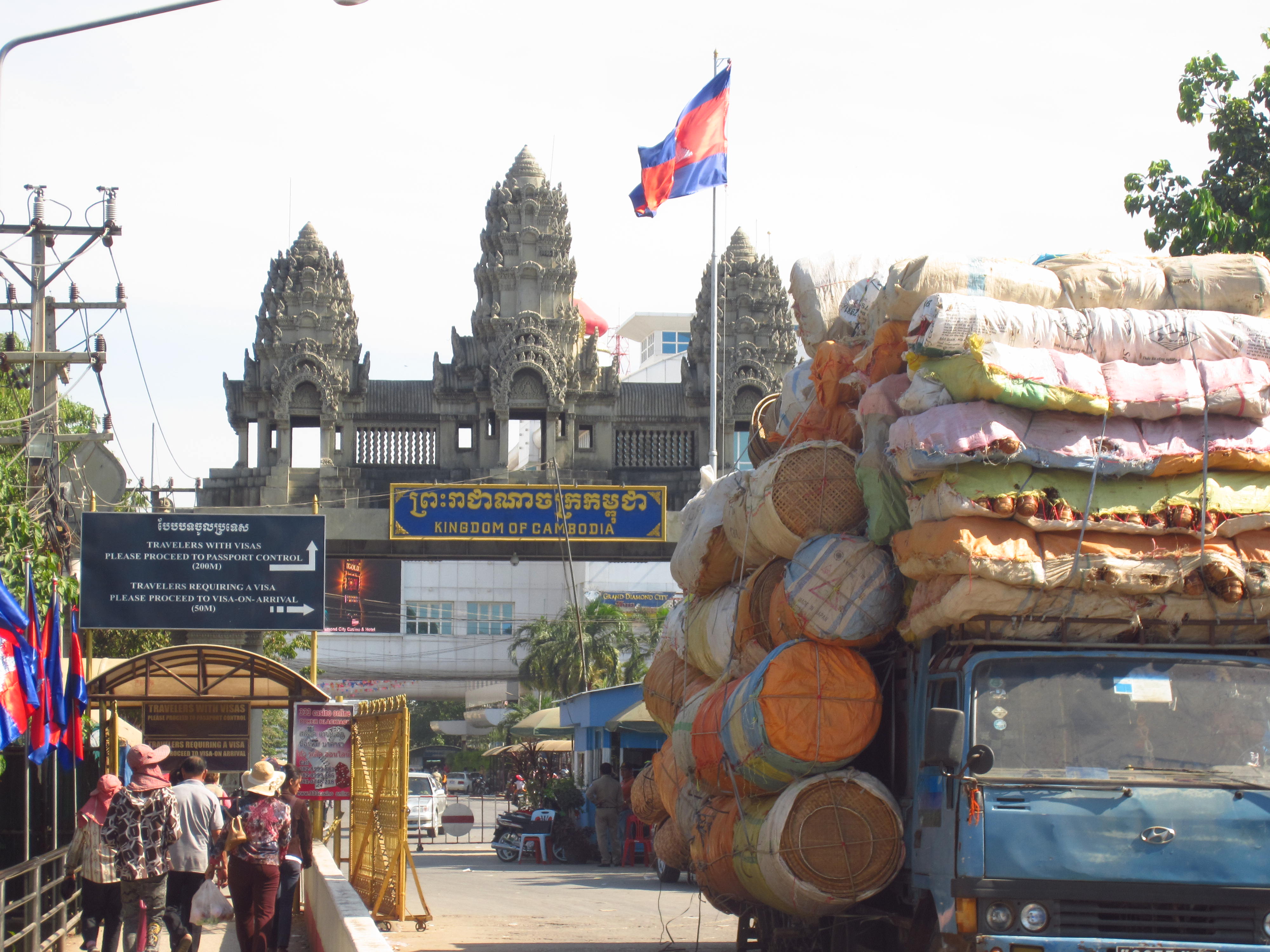
crossing the border
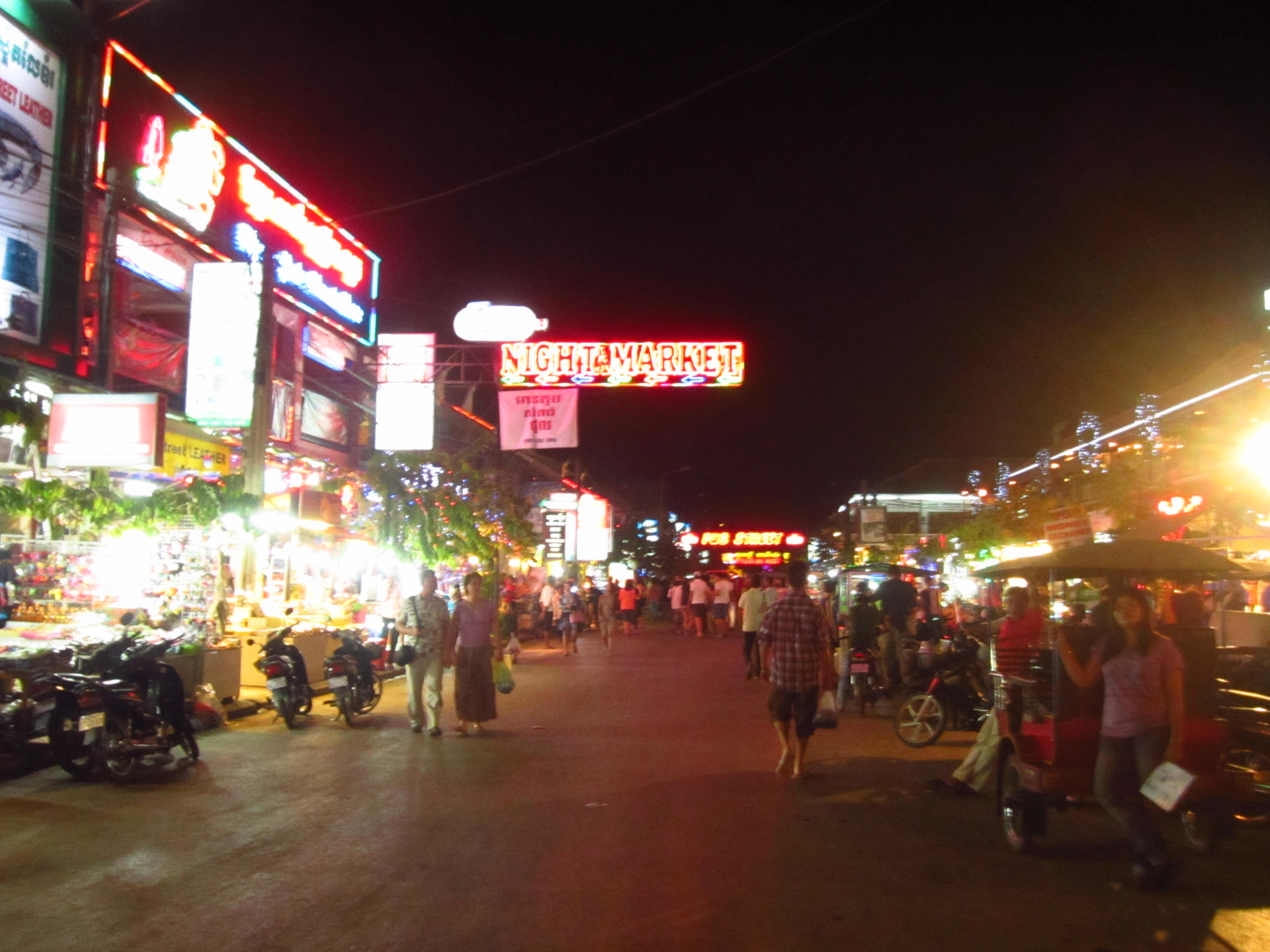
downtown Siem Reap
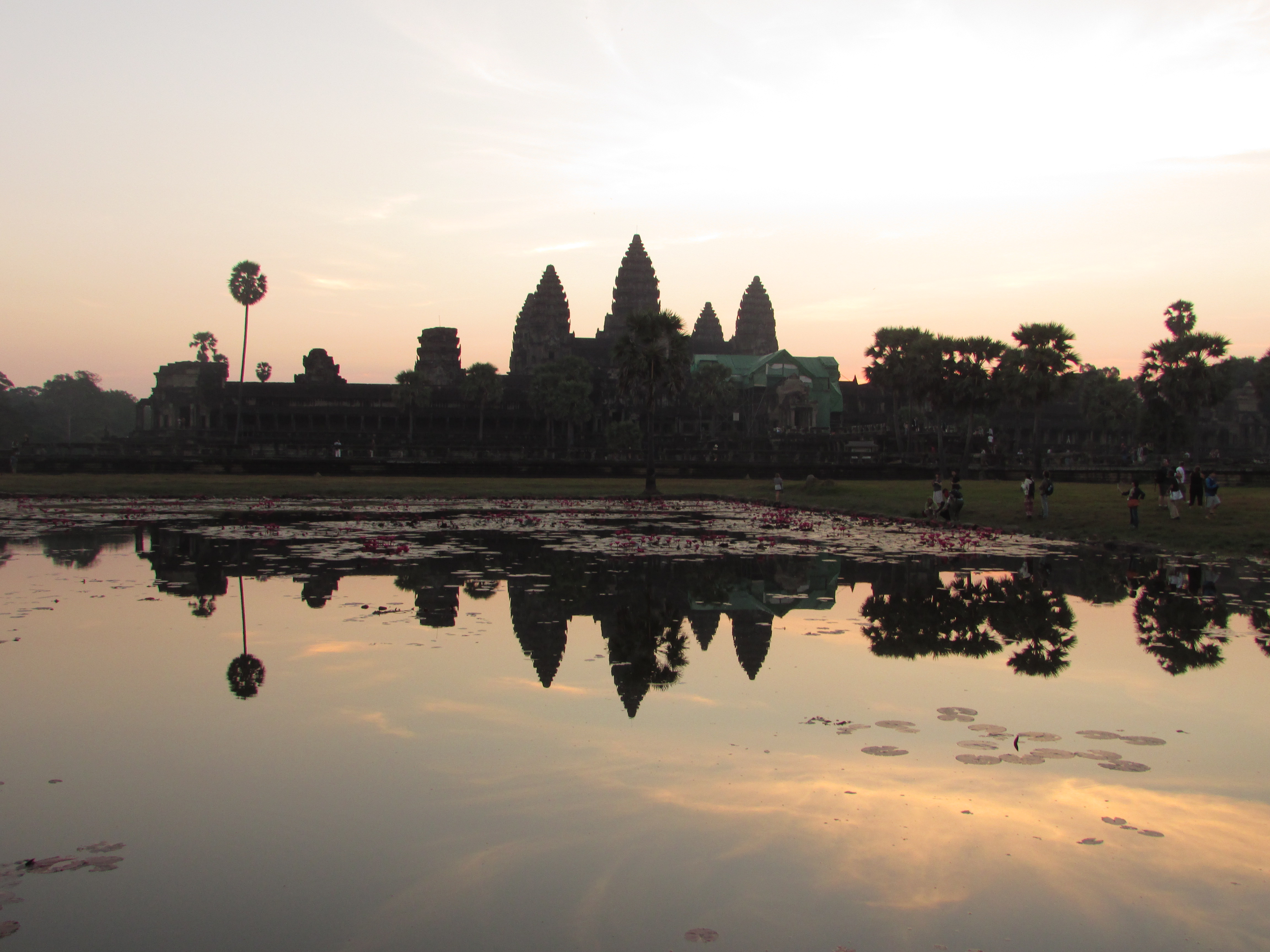
Angkor Wat sunrise
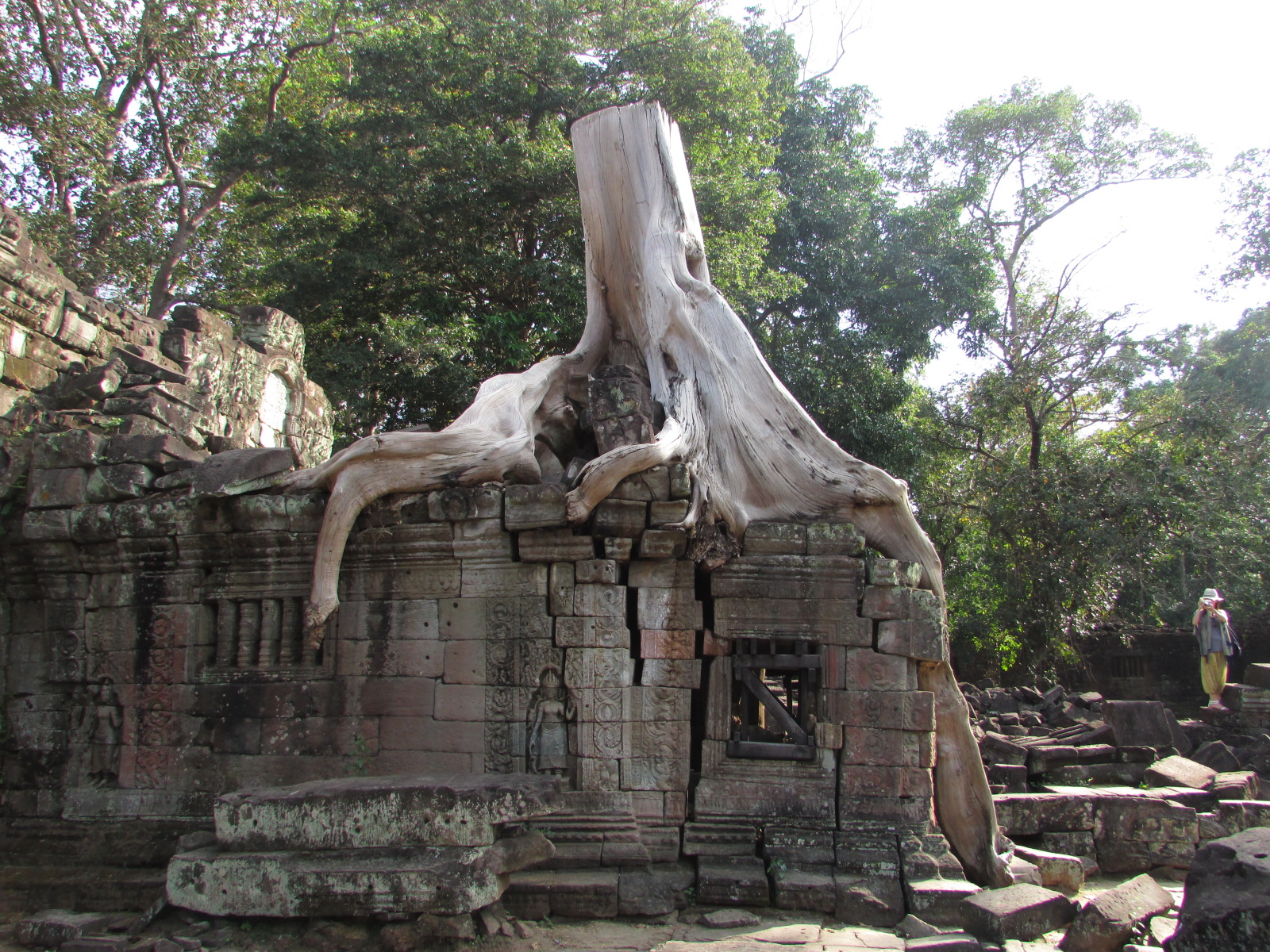
silk tree growing into the temple
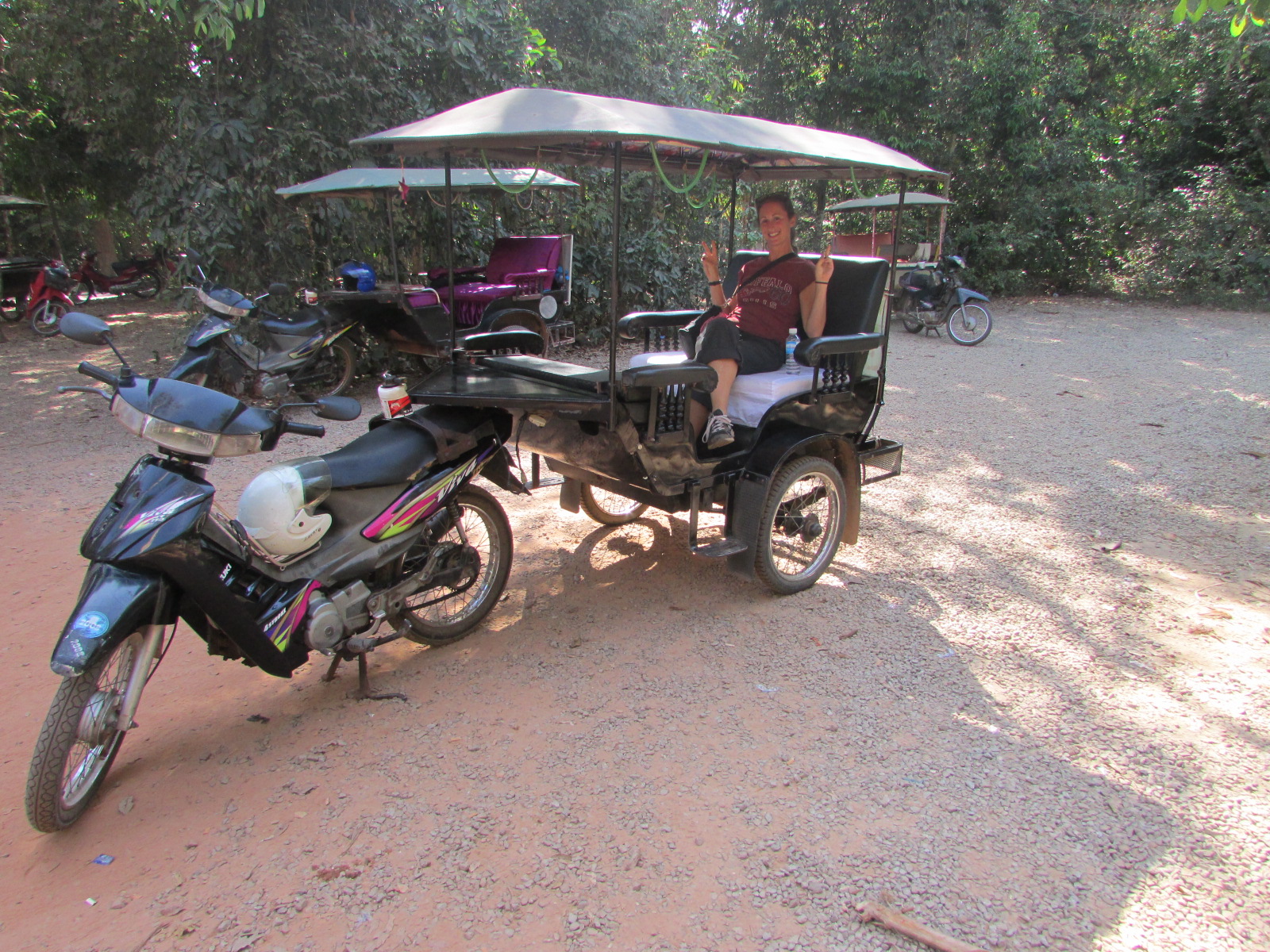
tuk-tuk
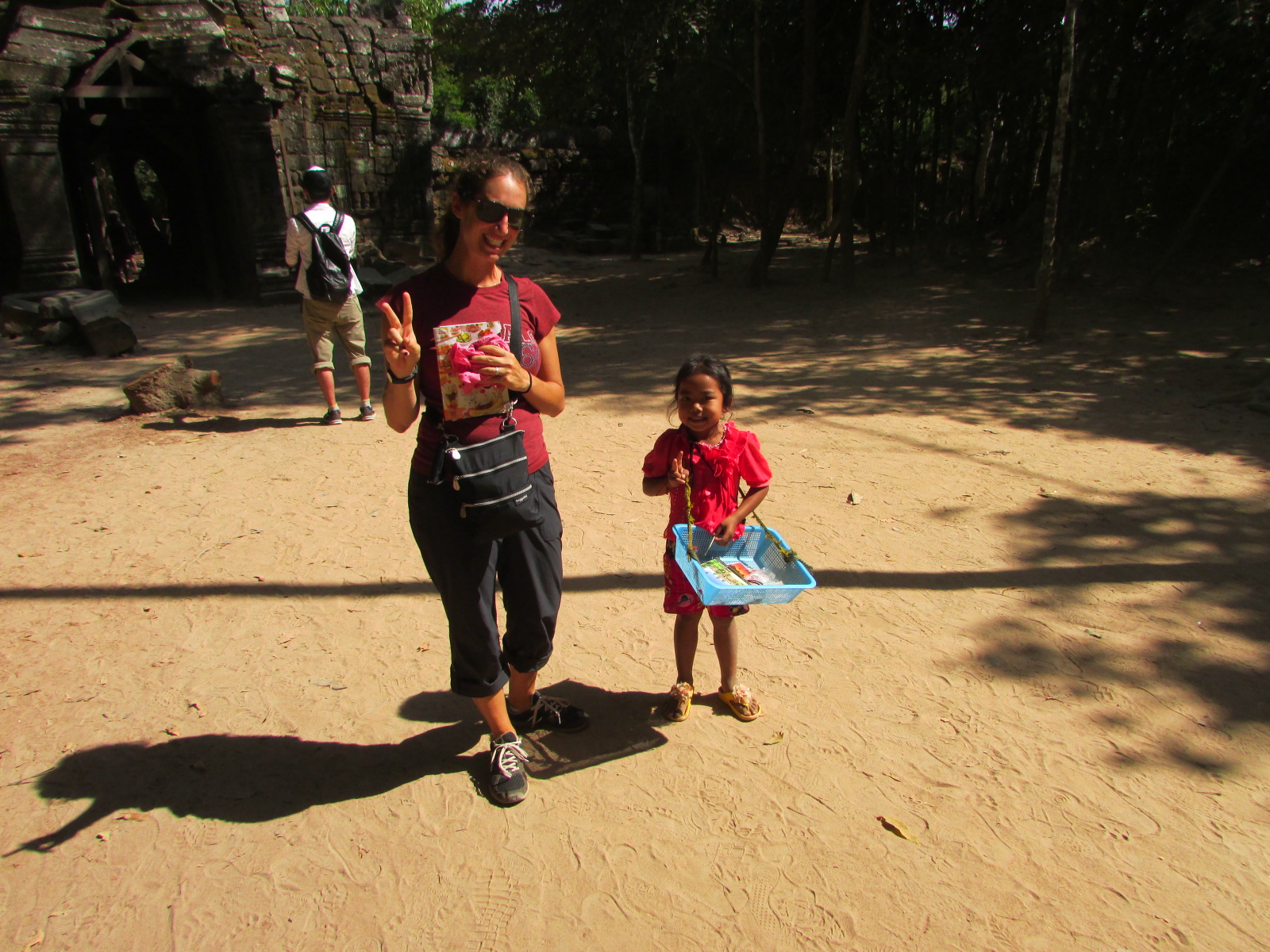
little girl selling postcards at temple
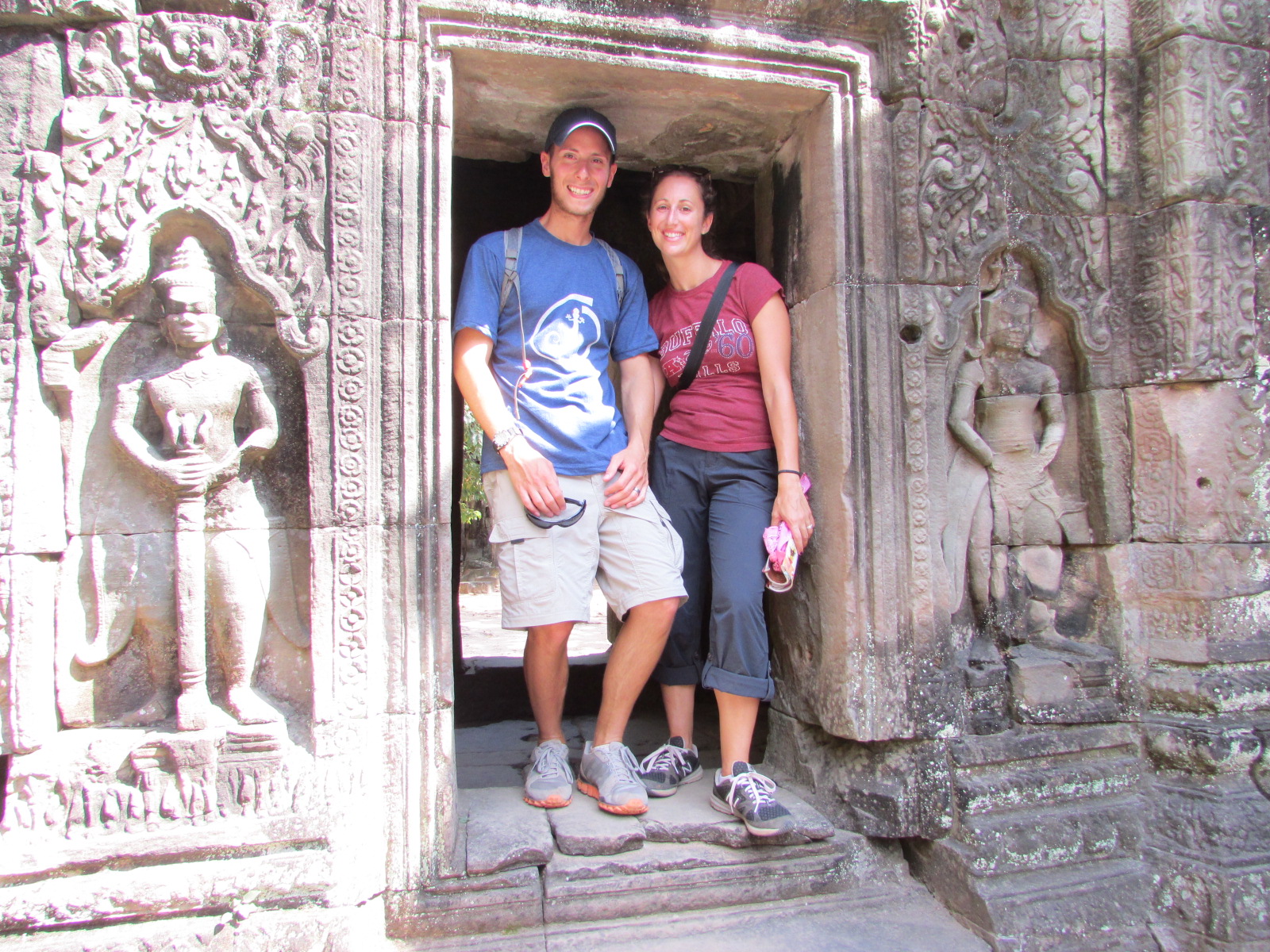
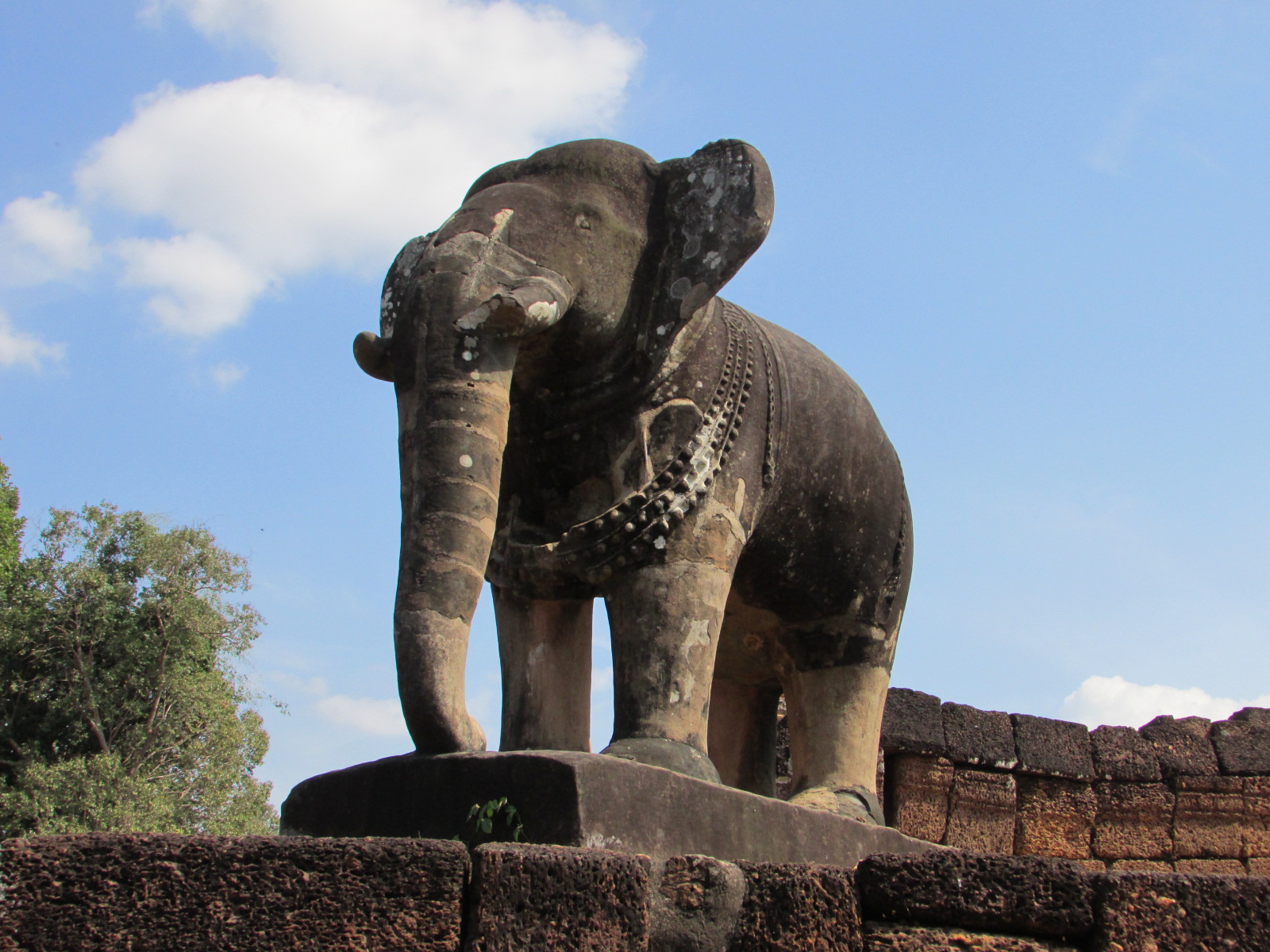
elephant at a temple

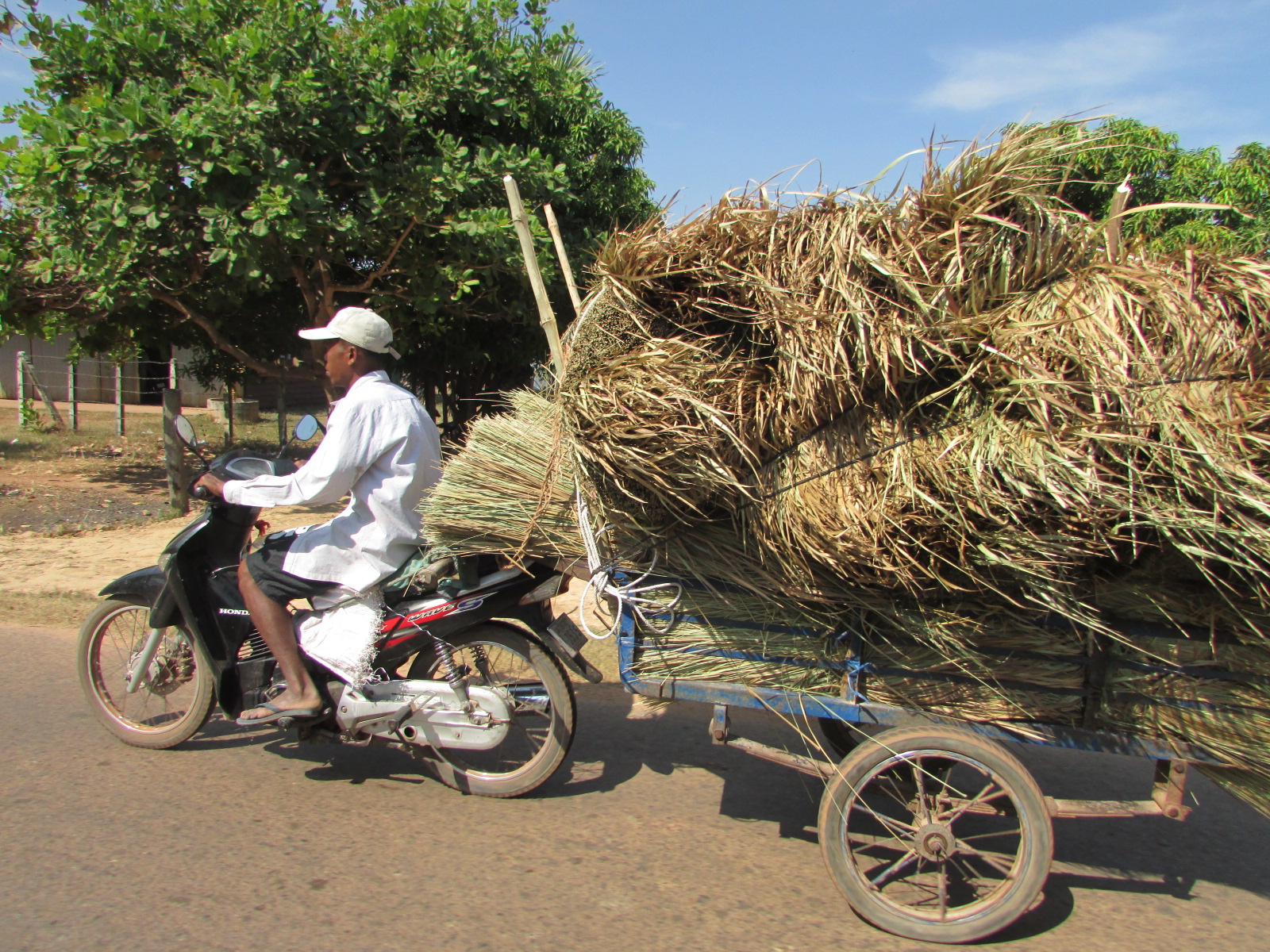
making palm sugar
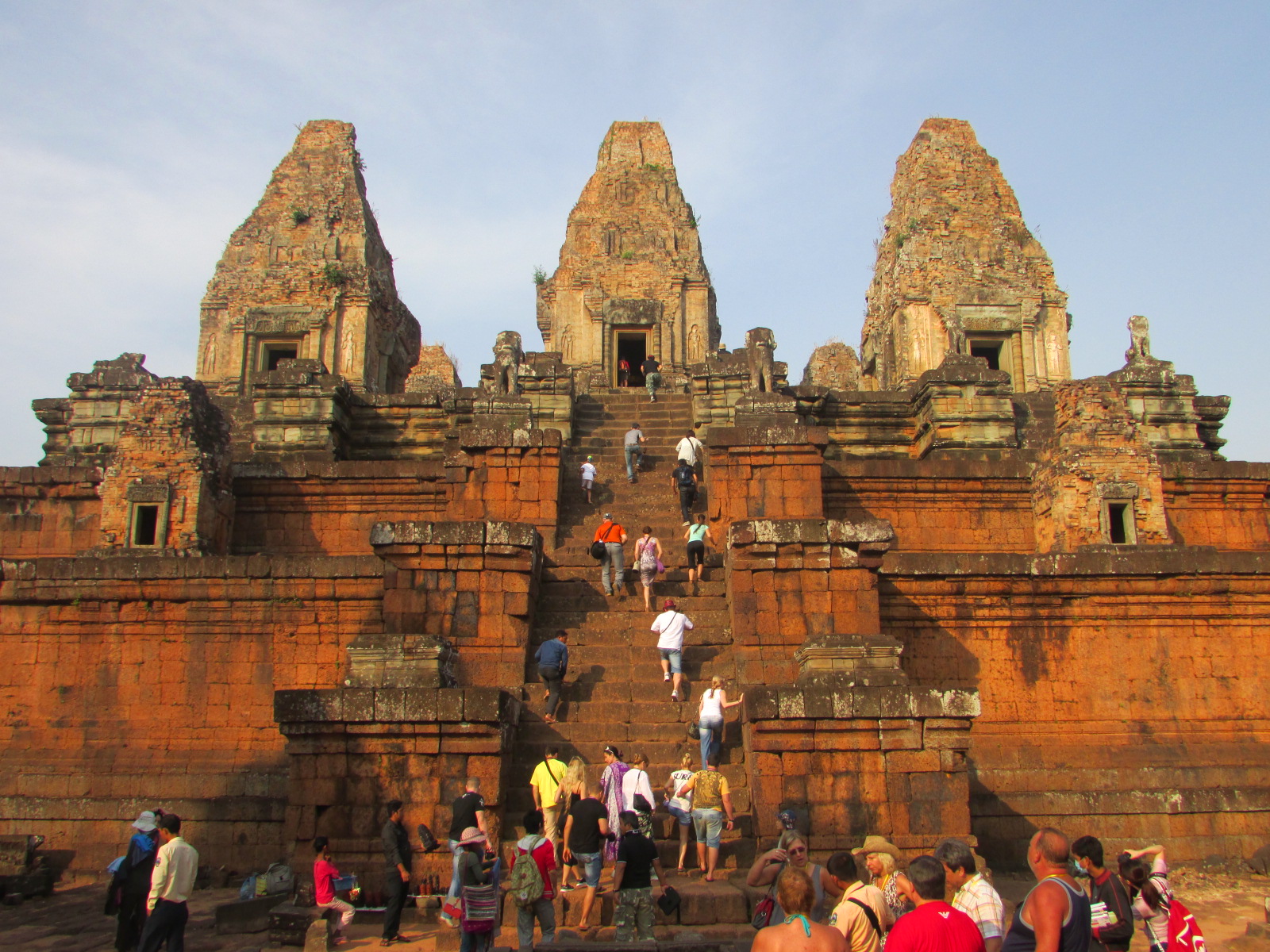
tallest mountain temple

Jayavaraman VII
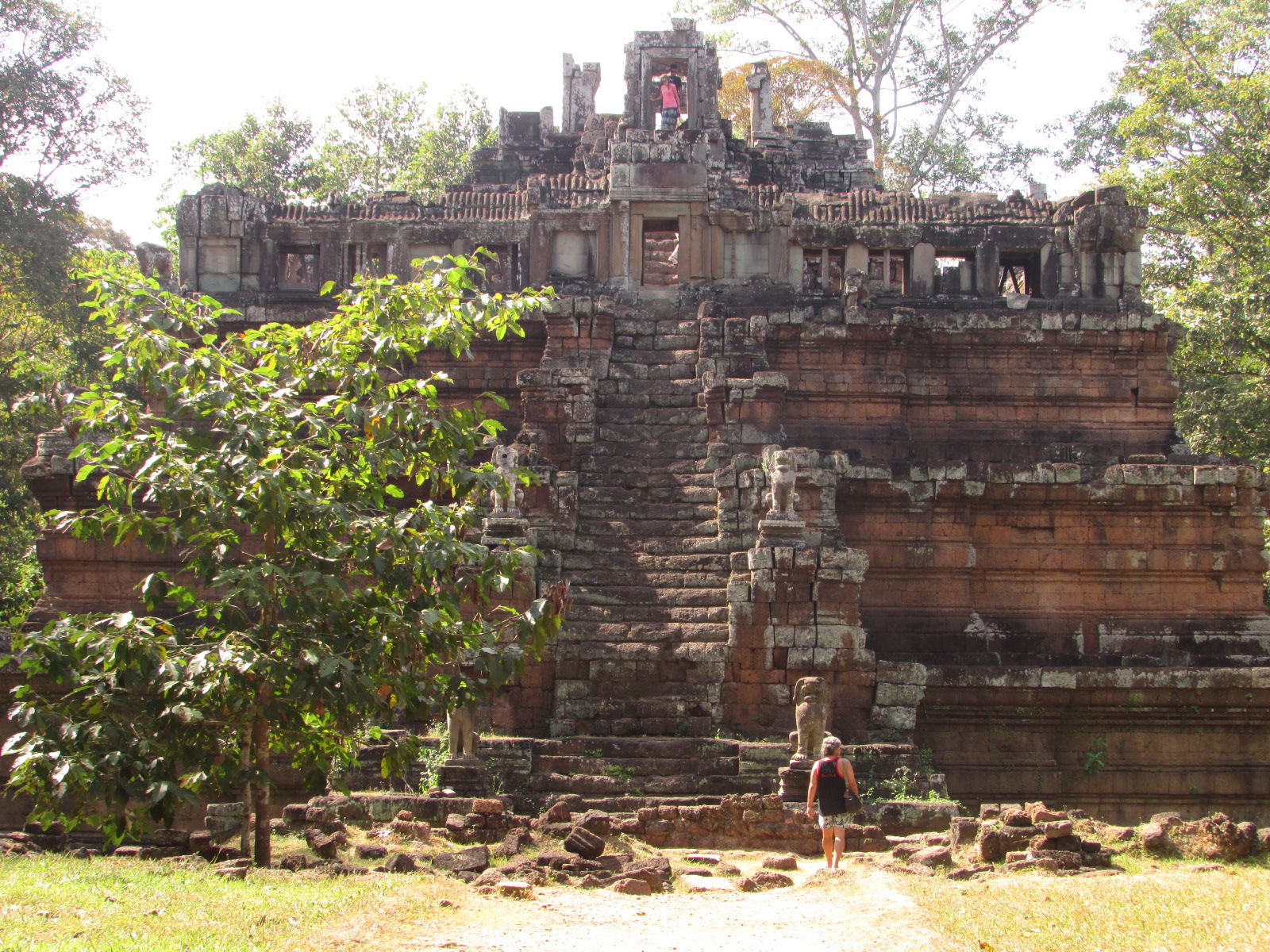
temple
The short version of our journey from Bangkok to Siem Reap goes something like this: Both the Thai and Cambodian government turn a blind eye to the blatant corruption involving the Poipet border crossing. If you would like to hear the details of how we experienced this first hand, please read below; otherwise, skip to the next paragraph.
We chose to take a bus from Bangkok to Siem Reap, Cambodia (gateway to Angkor Archaeological Park). However, at the time of our trip, there was no international bus that was able to make the border crossing. For trips originating in Thailand, Thai buses must stop at the Cambodia border where passengers must disembark, make their way to Thai immigration, cross over to Cambodia and find onward transportation. Sounds relatively painless, right? Not so much. First, the Thai bus driver dropped us off at a fake immigration office with spray painted walls suggesting that we can obtain a Cambodia visa. All the while, we are swarmed by tuk tuk (scooters attached to small carriages) drivers indicating that once we go through “immigration” they will drive us to the border. Luckily, we met an expat who had completed this trip a few years back and stuck with him. We looked for the most official looking building in the area and walked a few hundred meters to the real border. We made it through Thai immigration and exited into Cambodia. Oddly enough, at this point we are in a sort of immigration limbo. We are now standing in the town of Poipet, Cambodia full of sketchy looking casinos and even sketchier looking people, but have yet to go through Cambodia customs. We needed to obtain a visa on arrival, which is supposed to cost $20; however, once we entered the immigration facility, there was a hand written sign that said “$20 plus 100 baht” ($3). The officers said it was due to some imposed Thai fee. We watched the immigration officers take the additional fee and move it into another pile, presumably to be split up later. As we are people of principal and had some time on our hands, we refused to pay the additional 100 baht and therefore our applications were pushed aside for an extra 10-15 minutes while the willing payers strolled through. Luckily, we still received our visas without much of a fuss. After an hour long wait in a customs line, we hopped in a cab with two other travelers and took a 3 hour cab ride to Siem Reap. However, the cab driver indicated that it was illegal to pick us up at our current location, so we had to walk a 100 meters or so outside of the border to pick up the cab. We were told he would take us directly to our hotels and we finally felt like we could relax. Wrong again. Once we were a few kilometers outside of Siem Reap, the driver said he was tired and was not allowed to drive into Siem Reap city since he is a border taxi. This made no sense to us since he earlier said he lived in Siem Reap. He dropped us off in a parking area where tuk tuks were waiting to take us to our final destination. Of course, the tuk tuk would be free of charge. When Andy asked to use his phone to call our hotel (who offers free in-town pick up) he said he ran out of phone credits. Strange, because he had just used his phone 20 minutes earlier. At this point, the sketchiness was at an all-time high. We had heard that these tuk tuk drivers would only take us to hotels of their choice, where they receive a commission for bringing a tourist. Luckily, a shop owner allowed me to use her phone; we called the hotel and within a few minutes our savior, Ratanah, picked us up in his tuk tuk and took us to our hotel. Lastly, we need to mention that on our cab ride we stopped at the driver’s wife’s house to pick up a tube TV that came along for the ride with us. Needless to say after an 11 hour day we finally made it to Siem Reap!
We had planned 5 nights in Siem Reap and three days in the Angkor Archeological Park. On our first night visiting the park, we took a tuk-tuk to Angkor Wat to see the sunset. When you purchase a three day pass to the park you are allowed to enter on the previous night for sunset and still have three remaining days on the pass. It’s a nice way to maximize the value of a rather expensive park pass. The next day we decided to rent bikes for $2 and ride around the park. At the time this sounded like an excellent idea, however the park is 120 square miles and the temples can be somewhat distant from each other, while the park is also located a few miles outside of the city. After hours on bikes and about 20 miles, we saw many of the temples located in the “small circuit”. The Angkor Archaeological Park is hard to describe, it’s a magical place when you think that it took about 400 years to build massive temples with intricate detail starting in the 9th century. Each temple has different architectural features depending on which king built it. However, due to the age of the temples, many are in disrepair and at the end of the day can easily blend together. The locals describe them as “same, same, but different”. After our adventurous day on bikes and some exhaustion, we decided to hire a tuk-tuk driver for the next day to take us around to the larger loop as well as a temple (Bantey Serie) 37K outside of town. I would like to say the temples were the highlight of the day, but again everything was same, same but different. Therefore, the highlight of the day was the ride out to the Bantey Serie. The drive took us through the country side, through small villages and rice paddie fields. We were able to see how the locals lived day to day, whether it was selling palm sugar on the side of the road, or harvesting the rice in their “front yard”. It was an eye opening experience. On our third day at Angkor, we were a bit “templed out” but decided to get up at 4:30am to take a tuk-tuk to Angkor Wat to watch the sunrise. We thought it would be less crowded at this hour, but boy were we wrong. At 5AM, the streets were more crowded than they were during the day. Apparently, everyone else thought it would be a great idea to watch the sunrise as well.
Cambodia really touched us in a special way. For some reason I don’t remember learning much about the Khmer Rouge in school, maybe it was taught and I wasn’t paying attention or perhaps it was never taught at all. However, a little history lesson for everyone at home: The rule of Khmer Rouge took place in the 70’s and early 80’s and wiped out a significant portion of the Cambodian population and almost all intellectuals. The mass killings occurred mostly in the cities (Penohm Penh was hit hardest), but the countryside was littered with landmines. Once the Khmer Rouge was defeated, the country was engulfed in a brutal civil war and it wasn’t until UN sponsored elections in 1993 that the country found peace. Due to the demographic shift from the mass killings of approximately 2 million people, over 50% of the population is now under the age of 15 and a significant amount of the city population today are young adults. This generation has a difficult task on its hands; they are responsible for re-building the country and hopefully creating a (stronger) middle class. The young generation appears to be extremely hard workers and have a drive to make their country better. The owner of our hotel was 25 years old, and was training his staff to speak English. He grew up in the countryside and moved to the city to receive an education. He then worked as a tuk tuk driver to learn English, once he knew English he could get a job in a hotel and took those skills and started his own hotel. He now provides work for the rest of his family. A noble, but not uncommon act in Cambodia. Many of the young adults who grew up in the countryside have similar stories of moving away from their families and heading to the city in hopes of making a better life for themselves and families. Primary education is often provided, but High School and Universities are costly and not well attended. A year at a University can cost $600, which is too expensive for most young adults. We were very impressed with many of the stories of struggle and perseverance the Cambodians go through each day. It is not an easy life, but one that is not taken for granted.
Special thanks for Ton, Ratanah and Sivatha for making our stay so very enjoyable.
 wheresmyberger
Hey Andrew, Thanks for catching folk up on what they might have missed in school about the Khmer Rouge. As I child of the 60’s, I did not need to read about it in school, it was happening in my back yard, and I was an active hippy working to educate people about what was happening during this period. Here is what you did not read about in school:
The U.S. Unholy Alliance with the Khmer Rouge
The U.S. government’s secret partnership with the Khmer Rouge grew out of the U.S. defeat in the Vietnam War. After the fall of Saigon in 1975, the U.S.-worried by the shift in the Southeast Asian balance of power-turned once again to geopolitical confrontation.
For the U.S., playing the “China card” has meant sustaining the Khmer Rouge as a geopolitical counterweight capable of destabilizing the Hun Sen government in Cambodia and its Vietnamese allies.
When Vietnam intervened in Cambodia and drove the Pol Potists from power in January 1972, Washington took immediate steps to preserve the Khmer Rouge as a guerrilla movement. Then there were the ‘Killing fields’, as we all know about. Our tax dollars at work.
Fast forward to 1979, with continued CIA support, for 11 years the U.S. covertly aided and abetted the Pol Potists’ guerrilla war to overthrow the Vietnamese backed government of Prime Minister Hun Sen, which replaced the Khmer Rouge regime.
This story is repeated everywhere, throughout U.S history, all throughout the world. In the 1950’s 250,000 Guatemalan farmers were killed fighting for their land which was taken from them by United Fruit Company, in cahoots with Eisenhower, who funded their puppet government military to make suer the locals did not secure the land that they stole. Some people just roll over, like the Hawaiians during the U.S. occupation of their soverignty, whose paradise was destroyed when Dole relegated them to reservations (called affordable housing) so they can work in their fields….and on and on and on….
Keep waving that flag and calling it ‘the only place to live,’ Americans. Yes, the we control and enjoy most of the world’s resources, but at what cost?
Anyone interested in being a Canadian when we travel? Seems like the rest of the world is hip to us, while we travel in ignorance.
And yes, it is inspirational to see people making lemonade out of the lemons they were given. A testament to human spirit!
OK, my hippy rant is out of my system for a while…. as Dr. Shultz said in Django ‘I just couldn’t help myself’
VERY interesting! This might be my favorite post from you so far…..Miss your face Adinka! 😉
WOW……………..and we think we have it tough………….we don’t
It is heartbreaking what went on when the Khmer Rouge took over. I appreciate you sharing the history of the Cambodia. I reccomend the book “At first they killed my father” to anyone who wants to learn more.